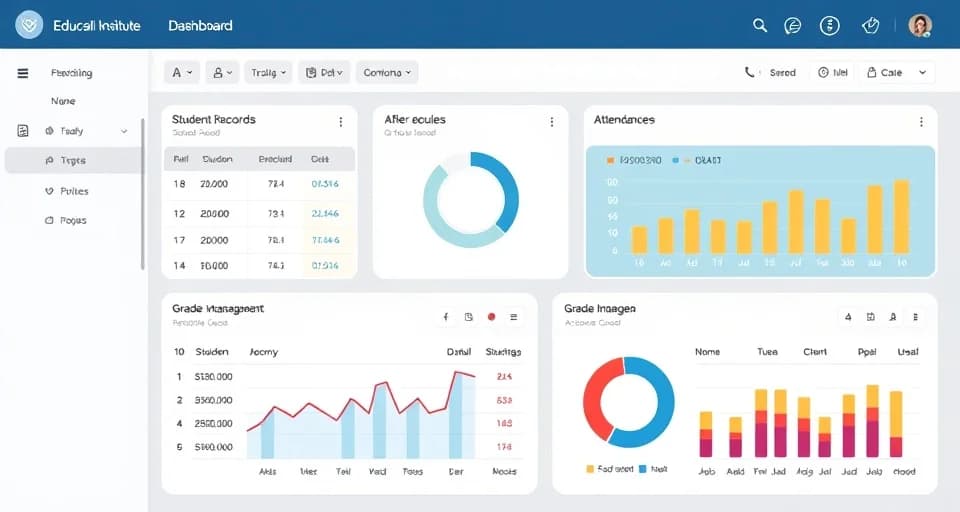
Effective communication between parents, teachers, and schools plays an important role in keeping parents informed and involved in their child’s education. Traditional methods such as paper notices, scattered messages, and delayed updates can make it difficult to share important information on time.
A School ERP Mobile App can bring notifications, academic updates, attendance information, fee reminders, and parent-teacher communication into one connected platform. This makes it easier for schools to share relevant information while giving parents convenient access to updates from their mobile devices.
The goal is not to increase the number of messages, but to make communication more timely, organized, and useful for parents and teachers.
Deliver School Updates Through Digital Notifications
Long time school system has relied on paper announcements, but they have not been the most effective means of message delivery. Announcements too often get lost, forgotten in the schoolbag, or received too late.
A School ERP Mobile App allows schools to send important notifications directly to parents’ mobile devices instead of relying on paper announcements.
The information can cover holidays, exam schedules, school events, notifications, and changes in schedule.
What’s more, schools can place importance on messages sent out by sending information to specific classes, grades, or sections instead of sending this message to every family.
Advantages of this method include:
- Faster delivery of important notifications
- Less reliance on paper
- Better awareness of school updates
- Convenient access for parents
Digital notifications make everyday communication faster and more effective in the school environment.
Give Parents Better Visibility Into Student Progress
Parents do not need to wait for the end-of-term discussions with their child’s school to find out that their child is performing poorly in class or is missing classes repeatedly.
A School ERP Mobile App can give parents convenient access to relevant information about their child’s academic progress. Depending on the school’s system, parents may view data regarding attendance, examination marks, tasks, assignments, and other academic updates via their smartphone.
This timely access allows parents and teachers to respond earlier when concerns arise. For example, a sudden drop in attendance or repeated incomplete assignments can give both the parent and teacher an opportunity to address the issue before it becomes more serious.
Access to this information is not only convenient; it can also encourage parents to take a more active role in their child’s education rather than becoming involved only when a problem arises.
Create a Direct Channel for Parent-Teacher Communication
Class-based messaging groups appear to provide ease, but they can make it easy for important school news to get lost. A proper communication channel can help schools keep conversations between teachers and parents orderly and effective.
A School ERP Mobile App can provide a dedicated platform for parents and teachers, which allows them to communicate regarding various school issues without requiring personal phone numbers or individual messaging channels.
Implementing communication through the school management system provides teachers with the opportunity to communicate relevant information to parents while separating school messages from their personal communications.
An organized communication system can provide schools with the following benefits:
- Organized communications
- Organized conversations between teachers and parents
- Concentrated school-related communications
- Avoidance of redundant group communications
- Facilitated tracking of significant messages
- A useful way for parents to address their queries and news
Automate Attendance and Fee Notifications
Parents require timely information regarding anything that needs their attention. A School Mobile App enables schools to automate the process of sharing various types of notifications about attendance and fee payments, which allows parents to obtain information without having to reach out personally.
Through automated notifications, after attendance is taken, parents can learn about their children's status. Additionally, automated notifications can act as reminders for the upcoming deadlines for payments. That way, the parents are aware of the most essential dates.
On the side of school employees, automated notification systems reduce the need for repeating calls and reminders. As the result, parents receive different updates, too, via the same system.
However, the automation system should not replace communication aimed at resolving the matter between teachers and parents when situations with students are discussed.
Involve Parents in the Feedback Process
Effective communications include both sending and receiving information from parents. Schools can give parents the opportunity to express their thoughts about the situation in a digital manner.
The School Communication App facilitates feedback collection through various means such as online forms, pupil surveys, event feedback, or simple questionnaires. This allows schools to get an organized view of the parents’ perceptions, thus helping them notice the areas they need to work on.
For instance, parents leave feedback following a school event or give recommendations related to the academic side, information sharing, and other aspects of their children’s school life. Continuous feedback makes it possible for the school to recognize and act on the repeated issues raised ever so often.
Continuous digital feedback also enables parents to feel like they are listened to, making it possible for schools to gain crucial information for operating effectively.
The Importance of Integrated Communication for Schools
Managing different systems for attendance, academic information, fee notifications, messaging and feedback can complicate communication in schools. Parents have to check different platforms for updates, while the staff needs to manage the information across multiple systems.
A Digital Diary for Schools can combine the day-to-day communication taking place in schools like homework updates, notifications, reminders, schedules and teacher messages into one digital channel. It can help lessen reliance on a paper diary, thereby simplifying everyday school updates for parents.
A School Diary Mobile App can also ensure that families stay updated with school information through their mobile devices, making the communication simpler and lessening the dependence on paper.
Better Communication Leads to Better Engagement
An efficient way to achieve effective communication with parents is to focus on informing them about school events that matter most.
Schools can facilitate parents’ engagement by using digital notifications to apply academic or attendance updates, unique channels of parent-teacher communication, automatic reminders, and regular feedback collection.
With the help of a School ERP Mobile App, all the modes of communication mentioned may be combined on one platform and therefore facilitate information exchange.
The significance of efficient communication between parents and teachers cannot be overstated, as it ensures that parents are updated and engaged in their children’s education. Timely updates, relevant information, direct communication channels, and automated notifications will make parent-teacher communication more reliable and effective.
The School ERP Mobile App can also perform all the needed communication from one single app. The parents will be able to receive the school reports, attendance notifications, reminders about fees, educational information and reports on the school activities through direct notifications without relying entirely on paperwork and other channels.
For educational institutions, however, the objective is not to communicate more often, but to communicate better. Digital solutions help the institutions in minimizing repetitive communication efforts and keeping parents informed.
Improve Parent-Teacher Communication With AInstitute Cloud
AInstitute Cloud helps educational institutions bring communication, attendance, fee management, student information, and other essential processes together on one connected platform. With digital tools designed for schools, institutions can keep parents informed and make everyday communication more organized.