Managing an educational institution involves much more than teaching and learning. Admissions, student records, attendance, fee management, examinations, communication, and reporting all require accurate and efficient administration. Educational ERP software brings these processes together on a connected platform, helping institutions reduce repetitive paperwork, organize information, and manage day-to-day operations more efficiently.
For institutions that still rely on spreadsheets, paper records, and disconnected applications, cloud-based ERP systems provide a practical way to modernize day-to-day administration. By making information accessible through a centralized platform, these systems can help reduce duplication and improve coordination across different administrative processes.
Why Traditional Administration Is Becoming Difficult
With the growth of the organization, manual management of information has become more difficult than earlier. Some common issues are:
- Repeated data entry across different departments
- Difficulty maintaining accurate student records
- Delays in attendance and fee management
- Time-consuming report preparation
- Communication gaps with students and parents
- Limited access to information when working remotely
How Educational ERP Software Simplifies Administration.
Educational ERP software can bring important administrative processes together within a connected system. Instead of relying on separate tools for admissions, academics, fees, attendance, and communication, authorized users can access relevant information through a centralized platform.
For example, when student information is updated, the changes can be reflected across relevant areas of the system without requiring staff to update multiple files manually. This creates a more organized approach to managing institutional information and reduces repetitive administrative work.
Centralized Management of Student Information
The idea of the Student Records Management System is one that enables the institutions to organize various pieces of important information related to students in an effective way.
Educational ERP software can centralize important student information, making it easier for authorized staff to access, update, and manage records from one place.
The system may include in its records:
- Student profile
- Admission information
- Attendance records
- Academic performance
- Fee records
- Examination records
- Parent and school communication
Centralized records make it easier for authorized staff to retrieve the information they need without searching through multiple files or systems.
Automating Daily Administrative Activities
One of the major benefits of educational ERP software is its ability to automate repetitive administrative tasks.
Processes like fee notifications, attendance calculations, report generation, and notifications are done through pre-established workflows. Automation eliminates repetitive administrative tasks and allows users to concentrate on those functions that need human intervention.
By reducing manual calculations and repeated data entry, automation can also help minimize errors and free staff to focus on tasks that require human attention.
Improved Visibility for Management
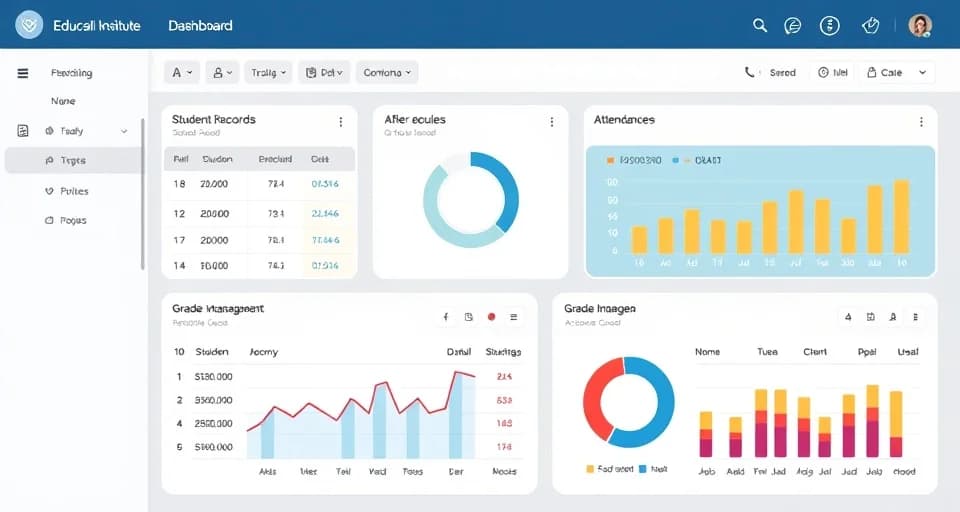
A properly configured ERP solution can provide management with dashboards and reports that offer a clearer view of institutional performance.
Rather than waiting for various departments to prepare reports, decision-makers gain access to the information that is required directly from ERP. At the same time attendance patterns, fee collections, student performance, and other operational information can be monitored more effectively.
This facilitates faster and more efficient decision-making process.
Better Student Record Management
Modern educational ERP software goes beyond basic student data storage. It can connect information across different stages of the student journey, from admission and attendance to academic performance, fees, examinations, and communication.
For institutions in India, moving from spreadsheets and paper-based records to a centralized digital system can improve consistency, accessibility, and efficiency in everyday administration.
Easy Cloud Access Without Need for Infrastructure
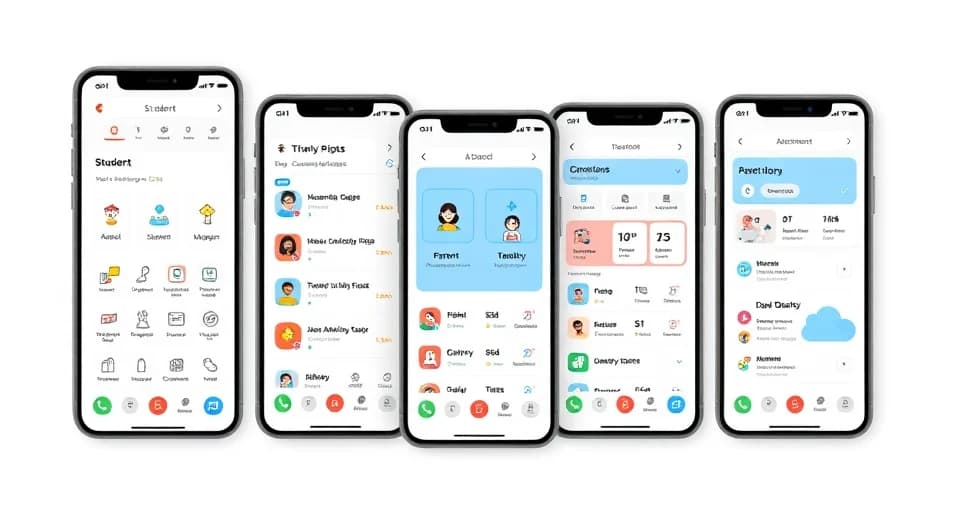
A cloud-based ERP system allows institutions to access their information through internet-connected devices without maintaining extensive on-premise infrastructure.
This is particularly useful for administrators and managers who need to get information about their institutions while away from the campus.
Regular system updates, backups and maintenance generally become part of the cloud service. So, the technical burden on the institution is reduced.
How Educational ERP Software Supports Different Institutions
Educational ERP software can support different types of educational institutions by bringing academic and administrative processes into a connected system. Depending on their requirements, institutions can use ERP solutions to manage student information, attendance, academics, fees, examinations, communication, and reporting.
For schools, an integrated system can connect attendance, academic records, fee management, parent communication, and other administrative information in one place.
Educational Administration in the Future
Technology is changing how educational institutions manage information, coordinate daily operations, and communicate with their communities. Cloud-based ERP systems can help institutions move away from fragmented, paper-based processes toward more connected and data-driven administration.
As educational institutions make progress in their use of technology, ERP solutions will be adopted to manage student data, education, financing, communication, and everyday activities.
Educational ERP software can make educational administration more organized, accessible, and efficient by bringing student records, academic information, attendance, fees, communication, and reporting into one connected platform. By reducing repetitive manual work and improving
access to information, ERP systems can help institutions manage everyday operations more effectively.
For institutions looking to modernize their administrative processes, choosing a secure, user-friendly, and scalable educational ERP solution can provide a stronger foundation for long-term digital growth.
Simplify Educational Administration With AInstitute Cloud
AInstitute Cloud brings student management, attendance, fees, communication, and other essential institutional processes together on one connected platform, helping educational institutions manage their everyday operations more efficiently.