Ask any school bursar or administrator about fee management and you will hear a familiar story: late payments, reconciliation errors, parent phone calls, and staff spending hours every month chasing outstanding balances. For most schools, fee management is one of the most time-consuming and error-prone administrative functions — yet it is also one of the most critical, because it directly affects the institution's financial health.
What is less often discussed is the full cost of doing this manually. Beyond the obvious inefficiencies, manual fee management carries a series of hidden costs that add up significantly over an academic year.
The Staff Time Equation
Consider a school with 800 students. At any given time, some percentage will have outstanding fees, some will have paid partially, and some will have pending late-payment penalties. Tracking all of this manually — across multiple fee types, payment modes, and terms — requires constant staff attention.
If a single administrator spends even two hours per week on fee tracking, reconciliation, and reminder calls, that is over 100 hours per year dedicated to a process that could be largely automated. Multiply that across multiple staff members handling different aspects of fee administration, and the cost becomes substantial — not just in salary, but in what that time could otherwise be used for.
The Error Problem
Manual data entry creates errors. A misplaced decimal, a transposed account number, or a missed update to a student's fee record can cause significant downstream problems: duplicate payment demands, incorrect outstanding balances, and disputes that take time and goodwill to resolve.
Each error requires investigation, correction, and often a difficult communication with the affected family — eroding parent trust and creating extra work. In an audit context, reconciliation discrepancies also raise governance concerns that no school leadership wants to deal with.
Late Collections and Cash Flow Impact
Schools that rely on manual fee reminders — individual phone calls, paper notices, or informal messages — typically see higher rates of late payment than those using automated systems. The reason is simple: manual reminders are inconsistent, easy to overlook, and often delayed by other staff workload pressures.
Late fee collection creates real cash flow problems. Schools need to pay salaries, maintain facilities, and purchase resources on predictable schedules. When significant portions of expected fee income are delayed, it creates operational strain that leadership should not have to manage.
Research and real-world data from schools that have adopted automated reminders consistently suggest that automated systems reduce average collection delays by 30 to 50 percent compared to manual approaches.
The Solution: Integrated Digital Fee Management
Modern school ERP systems transform fee management from a reactive, manual process into a proactive, automated one:
- Automated reminders: The system sends fee reminders at configurable intervals before and after due dates — by SMS, email, and push notification — with no staff action required.
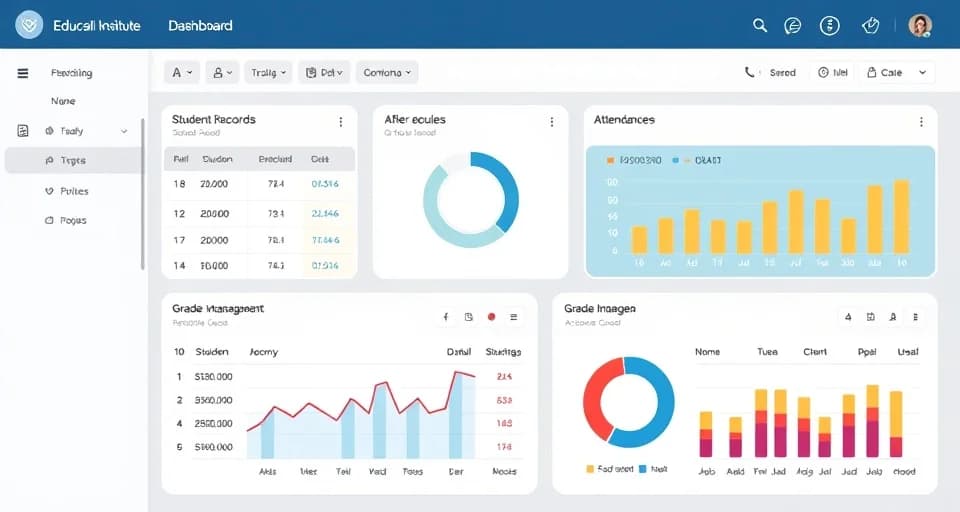
- Real-time dashboards: Administrators see live collection status: total expected, total collected, and outstanding by class or fee type. Reports that previously took hours are available instantly.
- Digital receipts: Every payment generates an automatic digital receipt, stored in the system and accessible to both the school and the parent. No printing, no physical filing, no manual distribution.
- Parent self-service: Parents can check their fee status, view payment history, and see upcoming dues through a mobile app at any time — reducing the volume of phone queries to the school office.
- Reconciliation automation: Integration with payment gateways allows online payments to be automatically reconciled against fee records, eliminating the most error-prone step in the entire process.
Making the Transition
The prospect of migrating fee records to a new system can seem daunting, but most modern school ERP platforms offer data migration support as part of their onboarding process. The transition period requires careful planning, but the long-term benefits — in staff time saved, error reduction, and improved cash flow — typically justify the effort many times over.
For school leaders evaluating fee management solutions, the key question to ask is not just "how much does this cost?" but "what is it costing us not to have this?"