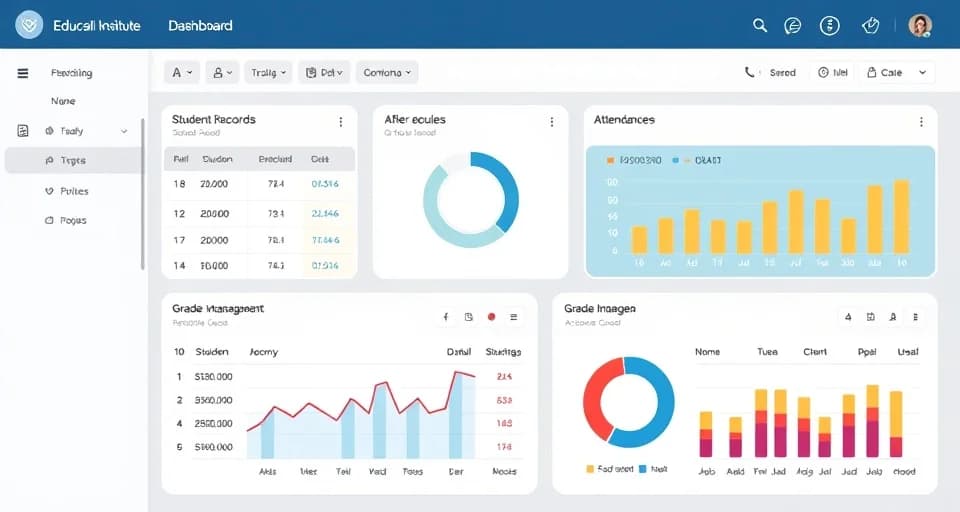
The school attendance register is one of education's oldest administrative tools. For generations, teachers began each class by calling names, waiting for responses, and marking a paper register — a ritual repeated thousands of times per day across schools. It worked, after a fashion. But it was slow, error-prone, and generated data that was difficult to aggregate, analyse, or act upon in any meaningful timeframe.
Digital attendance tracking systems are replacing paper registers in forward-thinking schools, and the reasons go well beyond simple convenience.
The Problems with Paper Attendance
Paper registers have several well-documented limitations that compound over time:
- Time consumption: Taking manual attendance in a class of 40 students takes 5 to 10 minutes. Across a school with multiple classes and periods per day, this adds up to significant instructional time lost every single week.
- Delayed information: Paper attendance records do not become useful data until someone manually compiles them — usually at the end of the day, or sometimes the end of the week. Parents do not learn about absences promptly. Administrators cannot spot attendance trends as they develop.
- Storage and retrieval difficulties: Physical registers must be stored, maintained, and retrieved for audits or regulatory purposes. Finding historical data for a specific student requires manual searching through physical records — slow and unreliable.
- Aggregation difficulty: Calculating attendance percentages, identifying chronically absent students, or generating class-wide reports requires manual computation that is time-consuming and error-prone.
How Digital Attendance Systems Work
Digital attendance platforms allow teachers to mark attendance on a tablet, smartphone, or computer in real time. The data is instantly stored in the central school management system, where it becomes immediately available to administrators, parents, and the student themselves.
For most school contexts, teacher-marked digital registers offer the best balance of simplicity and capability. Teachers complete the same task they always have — marking who is present and who is absent — but now it happens on a screen in the same amount of time, and the results are immediately useful data rather than marks on paper sitting in a drawer.
The Immediate Parent Notification Advantage
One of the most valued features of digital attendance systems is automatic parent notification. When a student is marked absent, the parent receives a push notification immediately — before the school day has progressed far. This simple feature has a significant impact in two important ways.
First, it eliminates the information gap that can allow truancy to develop undetected. When parents know about every absence immediately, the opportunity for a student to skip school without parental awareness shrinks dramatically.
Second, it provides genuine peace of mind to parents. Knowing that your child arrived safely at school — communicated automatically through a mobile app — is something parents genuinely value, particularly for younger children.
Data That Drives Action
The greatest advantage of digital attendance over paper is the quality and accessibility of the resulting data. When attendance information sits in a digital system, it becomes genuinely actionable:
- Early warning identification: Systems can automatically flag students who fall below a configurable attendance threshold — say 85% — and alert the class teacher or pastoral lead. Intervention happens earlier, before attendance problems become entrenched.
- Pattern analysis: Is a particular student consistently absent on Mondays? Are absences clustered around a specific subject? Digital data makes these patterns visible and searchable. Paper registers make them nearly impossible to detect.
- Compliance reporting: Schools are often required to submit attendance data to regulatory bodies. Digital systems can generate these reports automatically in the required format, eliminating a significant compliance burden.
- Academic correlation: When attendance data sits within an integrated ERP system alongside academic performance data, schools can analyse the relationship between attendance and grades at the individual student level — enabling more targeted, evidence-based pastoral support.
Implementation Is Straightforward
The transition from paper to digital attendance is generally simpler than most schools anticipate. Teachers require minimal training, as the digital interface mirrors the familiar register format. The primary requirement is reliable internet connectivity within teaching spaces, which most modern school buildings provide.
Schools that integrate their digital attendance system with a broader school management platform — rather than using a standalone attendance tool — benefit most, because attendance data flows automatically into reports, parent communications, and academic records without any manual export or import steps.